A valley folded between the ancient Wickwood and the Marl River. Tap a glowing marker to step inside it.
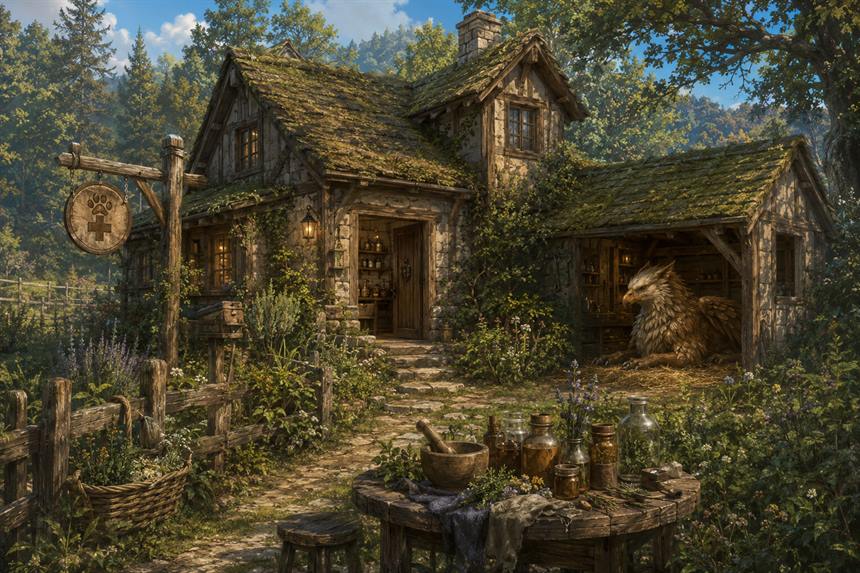
A converted cottage set back from the cart-track behind a stone wall and a hedge of dogrose. There is a separate barn for the larger patients — the wyverns, the moss-trolls, the occasional bewildered ettin.
The cottage has two front doors: the main one for villagers and herb-buyers, and a smaller one round the back for everyone else. Mae did not think this through when she built it. The villagers appreciated it more than they let on.
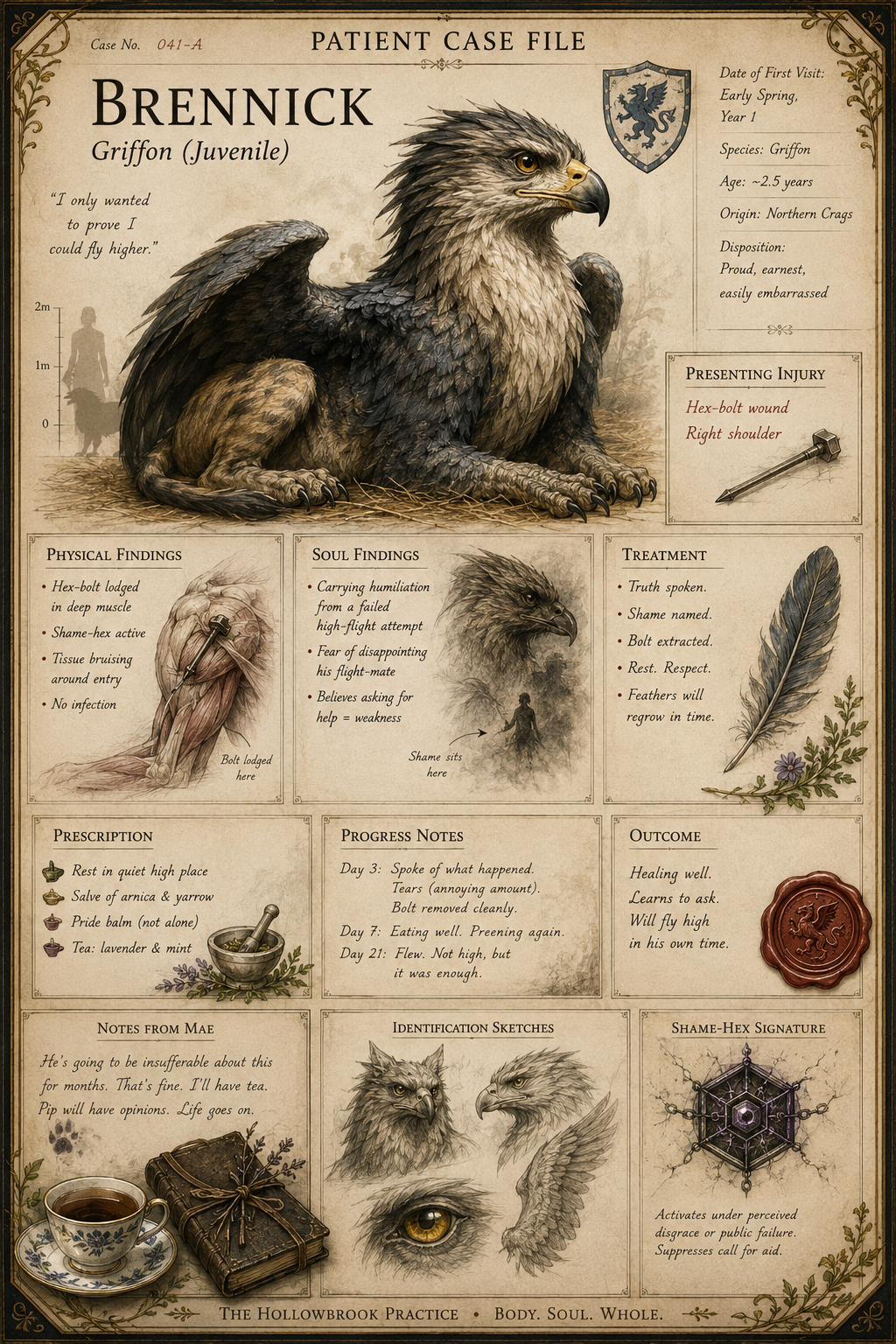
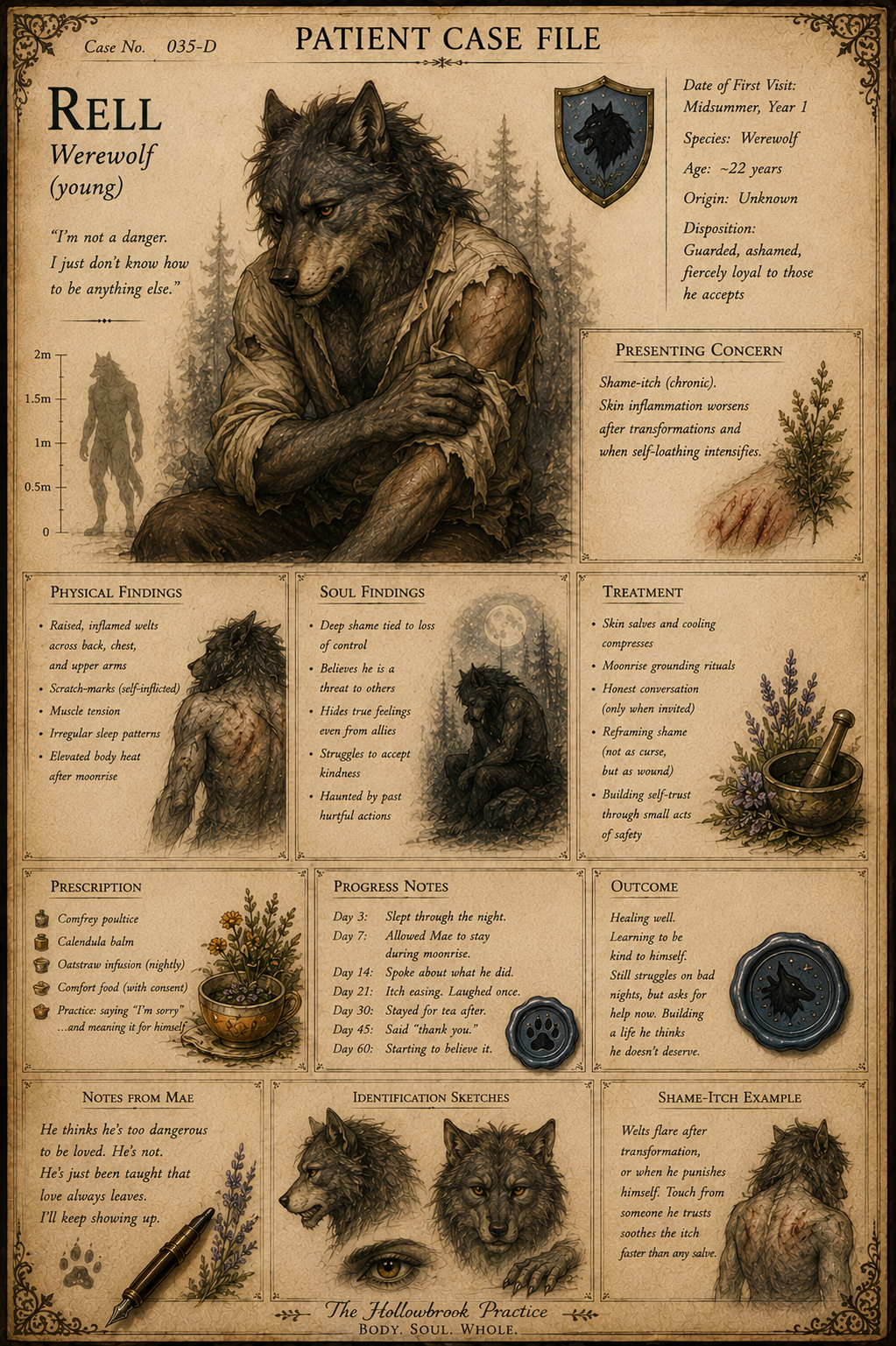
From the casebook: recent patients include Brennick and Rell.
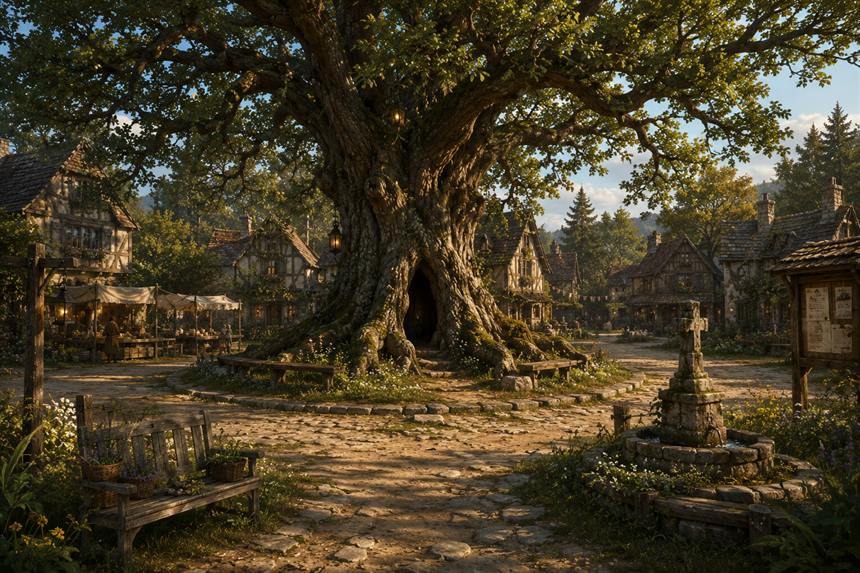
An enormous oak that nobody planted, that predates the oldest gravestones in the churchyard, and that is — by quiet local agreement — not to be discussed with strangers. Old Marrow calls it Aelreth: “the one who keeps the count.”
It does not eat anyone. It listens. It has opinions, and expresses them in small signs — a sudden drop of acorns, a rustle on a still day. The villagers have learned not to argue under it.
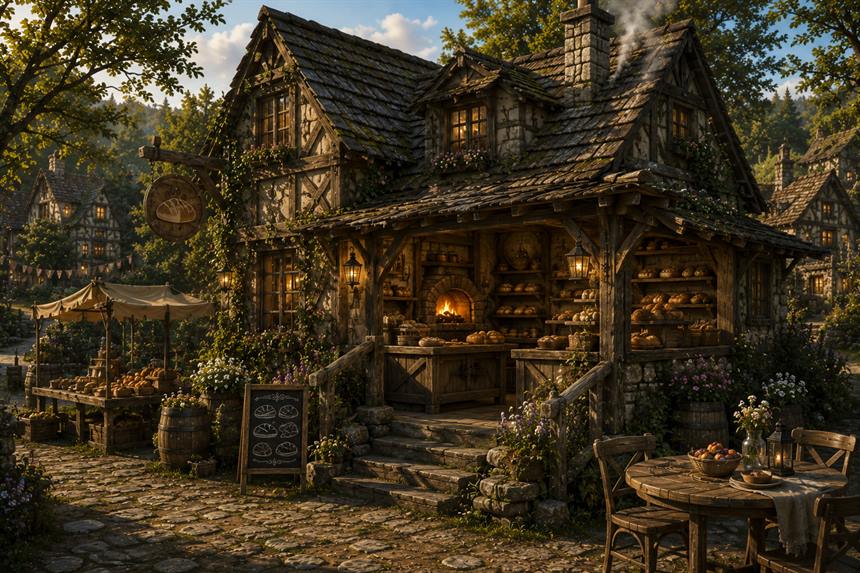
Bess Hollin’s bakery sits on the village green. Stone-built, low-ceilinged, smelling of yeast and rosemary.
Bess opens at dawn. The village runs on her schedule, whether it admits to it or not.
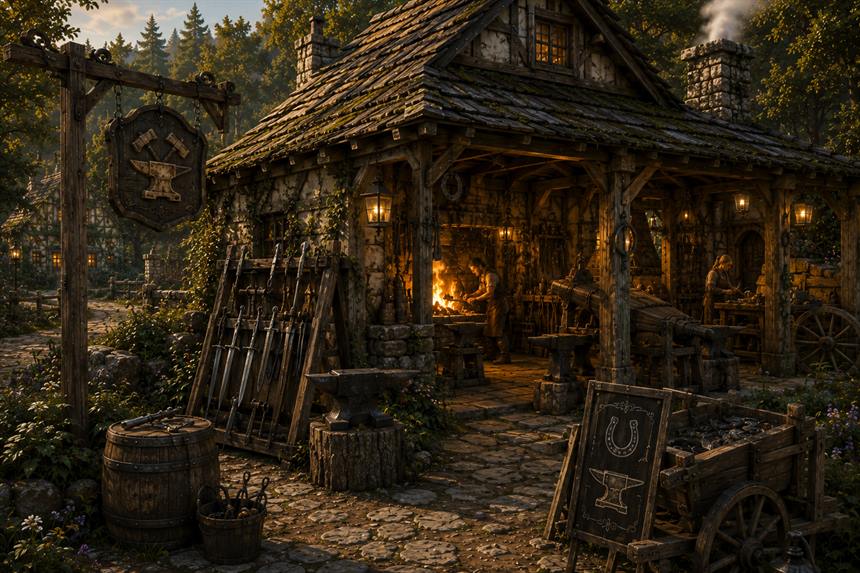
The smithy belongs to Tobin Smith, Anwen’s husband — a broad-shouldered man with a slow voice and quick hands.
The forge is one of the warmer places in the village come winter, which is why so much village business gets done leaning on its doorframe.
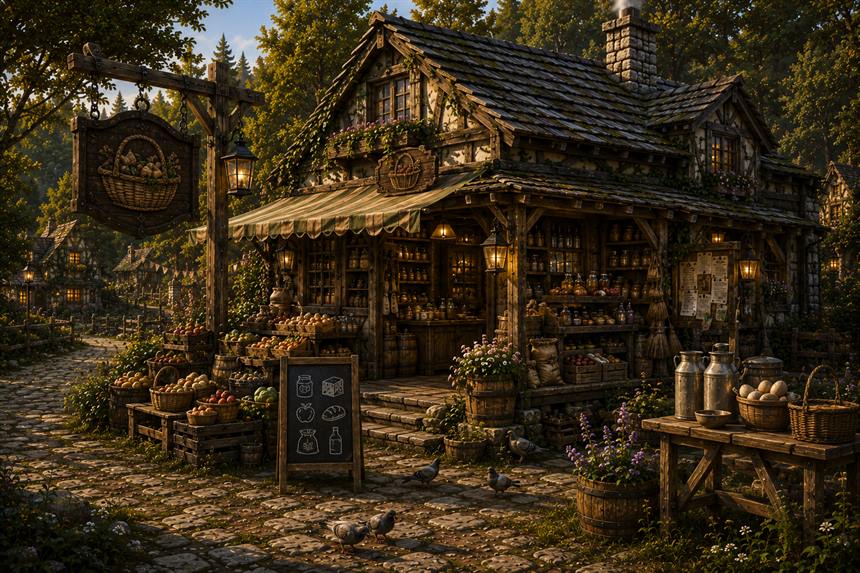
Run by Edda and Gerent Pell, a couple in their seventies who have been married so long they finish each other’s complaints.
They sell what people need and a little of what they want. They will let you owe them — but they remember.
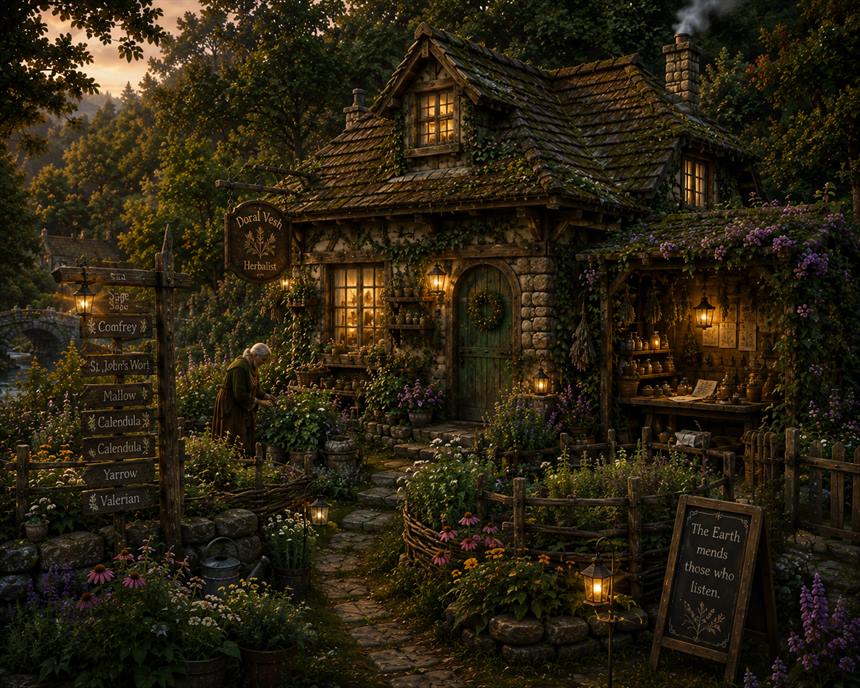
The herbalist’s house, its garden running uphill into the first fringe of the Wickwood. It smells of mint, mugwort, and something Mae can’t quite identify.
Doral has lived there for seventy years and gardens like she expects another seventy.
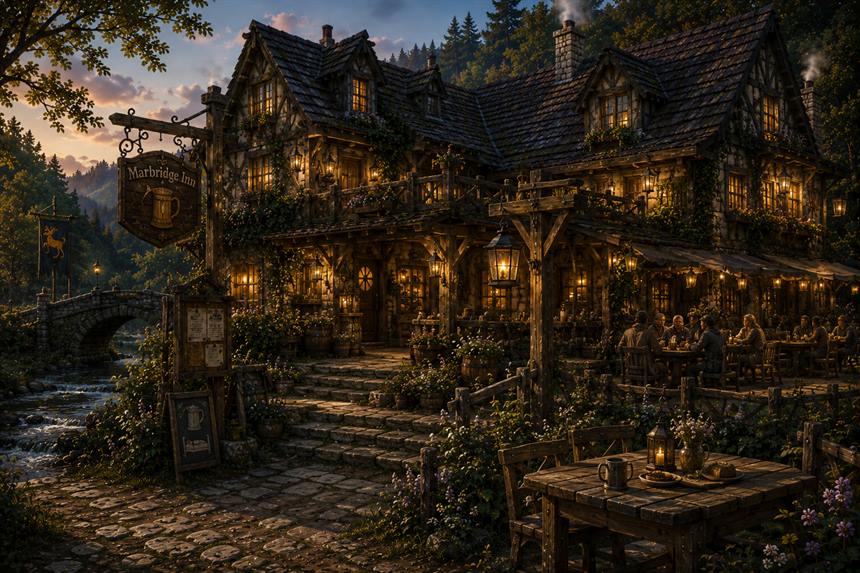
Run by Wessel Marl, a thin man in his fifties with the permanent expression of someone who has heard worse.
Three letting rooms upstairs, a common room down, and surprisingly good stew. Wessel knows everyone’s drinking habits and pretends not to.
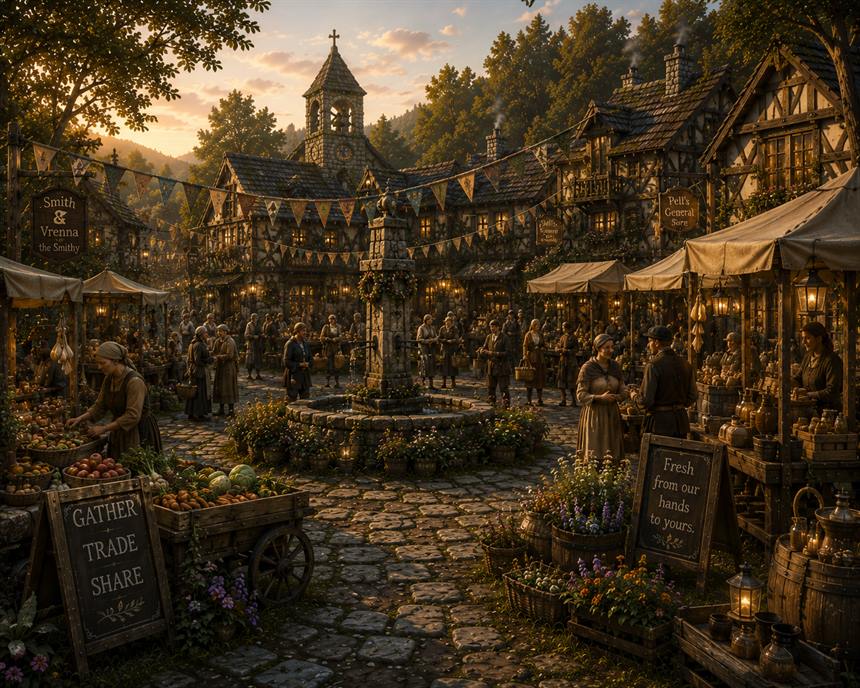
The beating middle of the village on the days it has a middle — which is most of them, weather permitting.
Half a day’s walk on the cart-track to the nearest proper road, which means visitors are rare and tax collectors rarer.
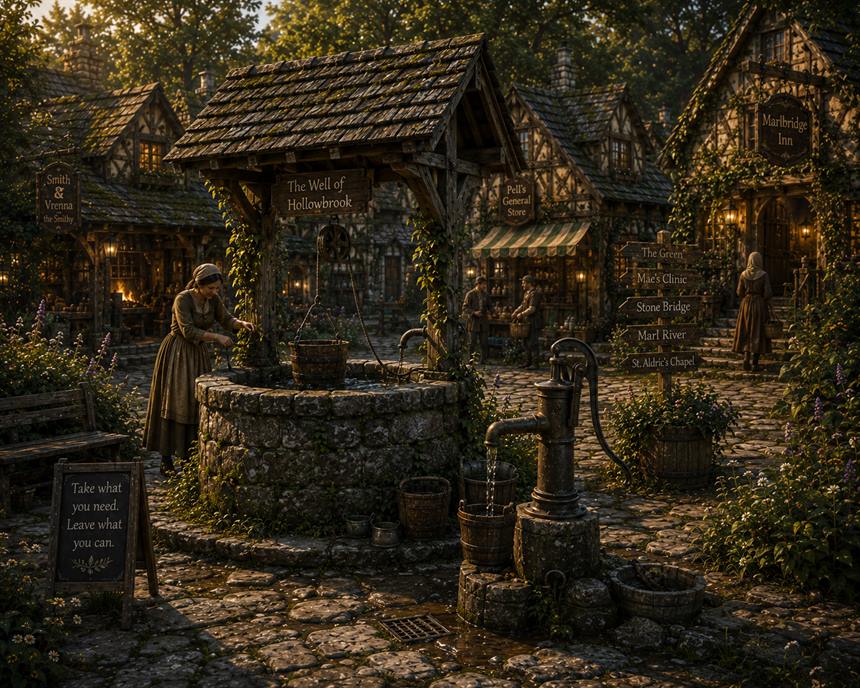
The village well, and the village’s true noticeboard.
News travels faster here than anywhere else in Hollowbrook, and twice as crooked.
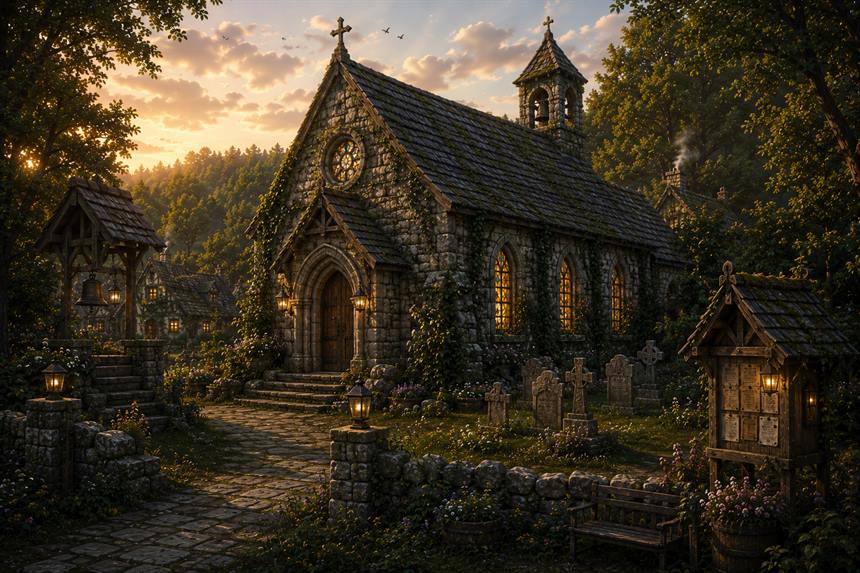
Small, stone, and without a regular priest in a generation. It is used now for weddings, funerals, and the occasional village meeting.
The Bright Path has not seen fit to assign anyone here — one of the reasons Mae chose Hollowbrook.
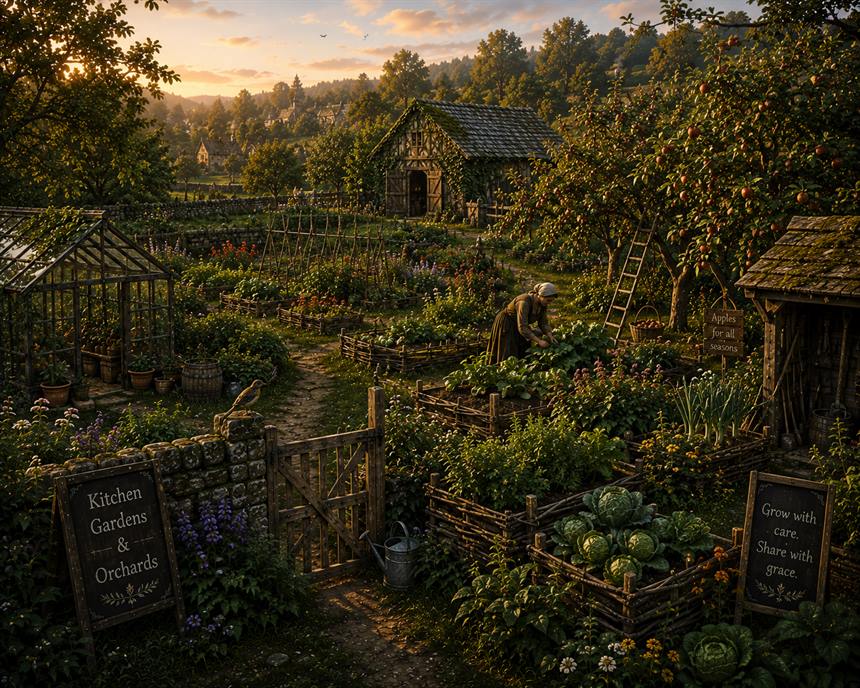
The valley floor is good for barley and root vegetables and not much else — part of why nobody in the regional capital pays Hollowbrook much attention.
The gardens and orchards keep the village fed through the long quiet seasons.
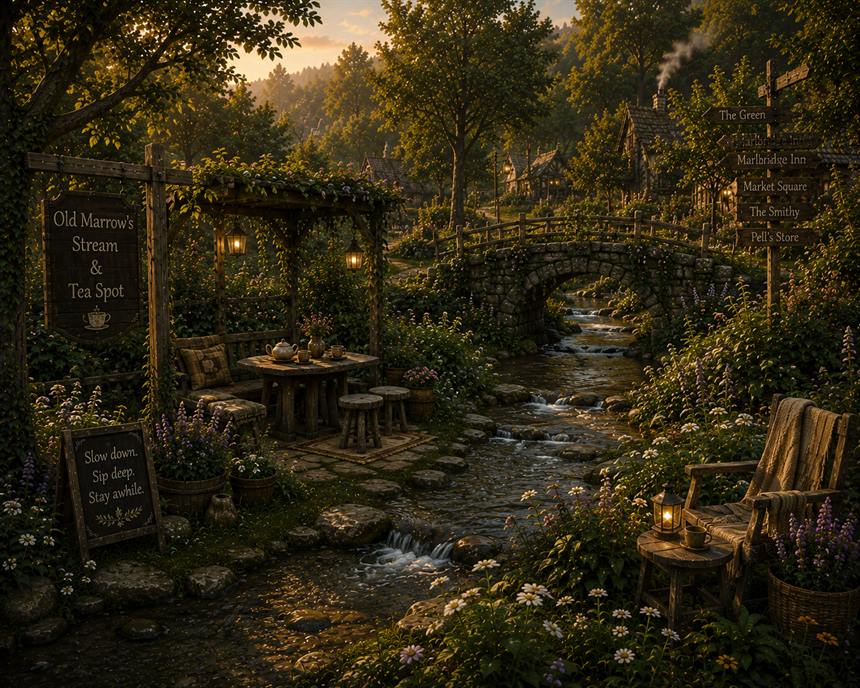
A bend of running water at the village’s southern edge, and the favourite haunt of Old Marrow — a brook spirit who has been around longer than anyone, and who takes tea very seriously.
The Old Tongue is spoken here, if it is spoken anywhere.
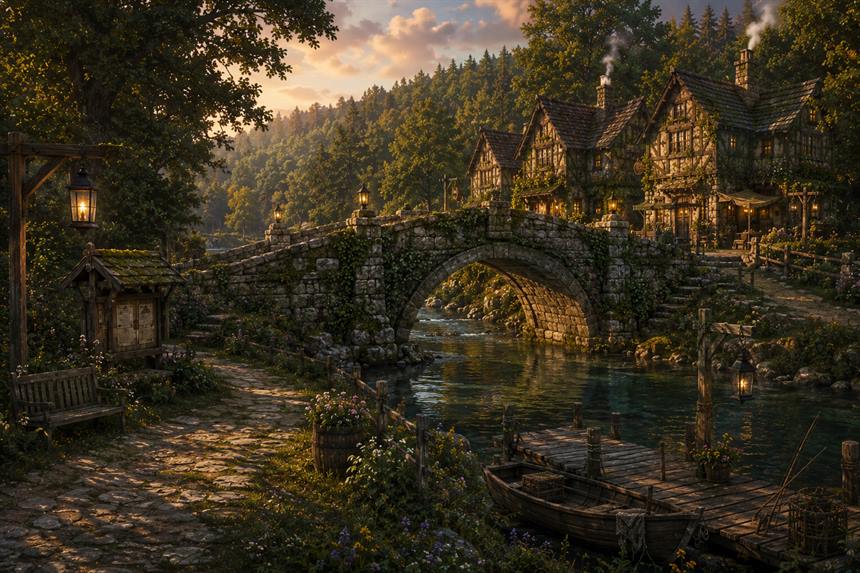
Stone, built across the Marl by an order of monks who have since vanished.
In spring the river floods the lower meadows just enough to make the cart-track impassable for two or three weeks. It is one of the reasons Hollowbrook has stayed forgotten.
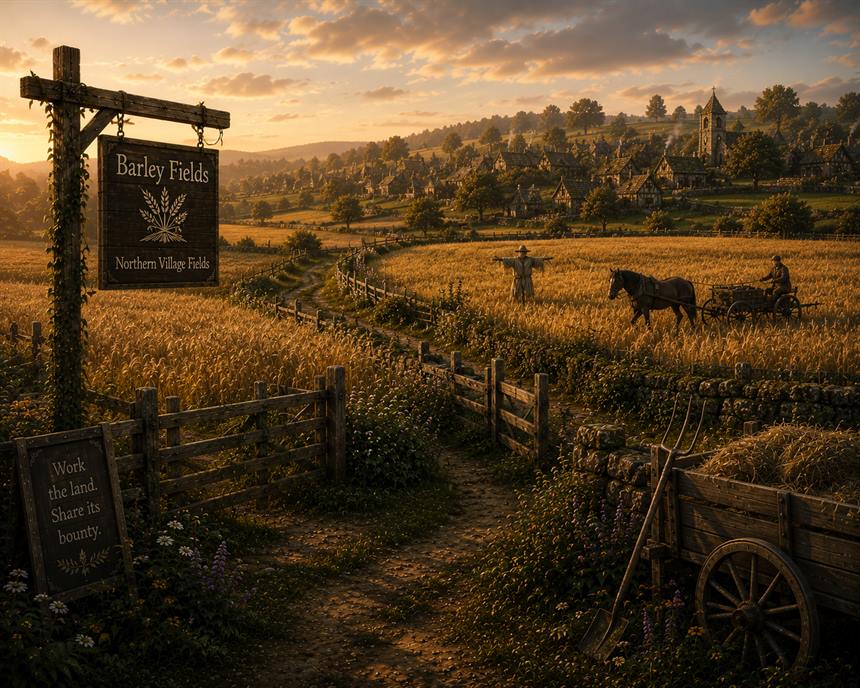
The valley’s barley and root crops — tended, harvested, and grumbled over.
The villagers are practical, tired, and not given to enthusiasm. But the warmth is there underneath, the way embers stay warm under ash.
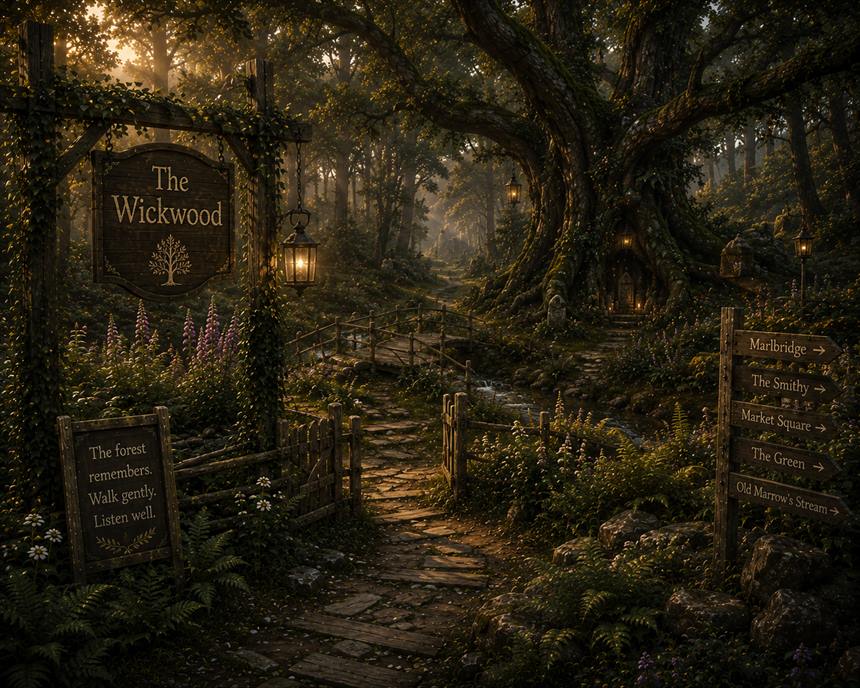
The forest north and east of Hollowbrook. Ancient, layered, vast. The southern fringe is ordinary woodland; half a day in, the trees change.
This is what most of the kingdom means when they say monster country — though it is not malevolent. It is old. Wyvern flights, moss-troll clans, a vampire community, two feuding pixie courts, brook spirits, and one very unsociable dragon all call it home.
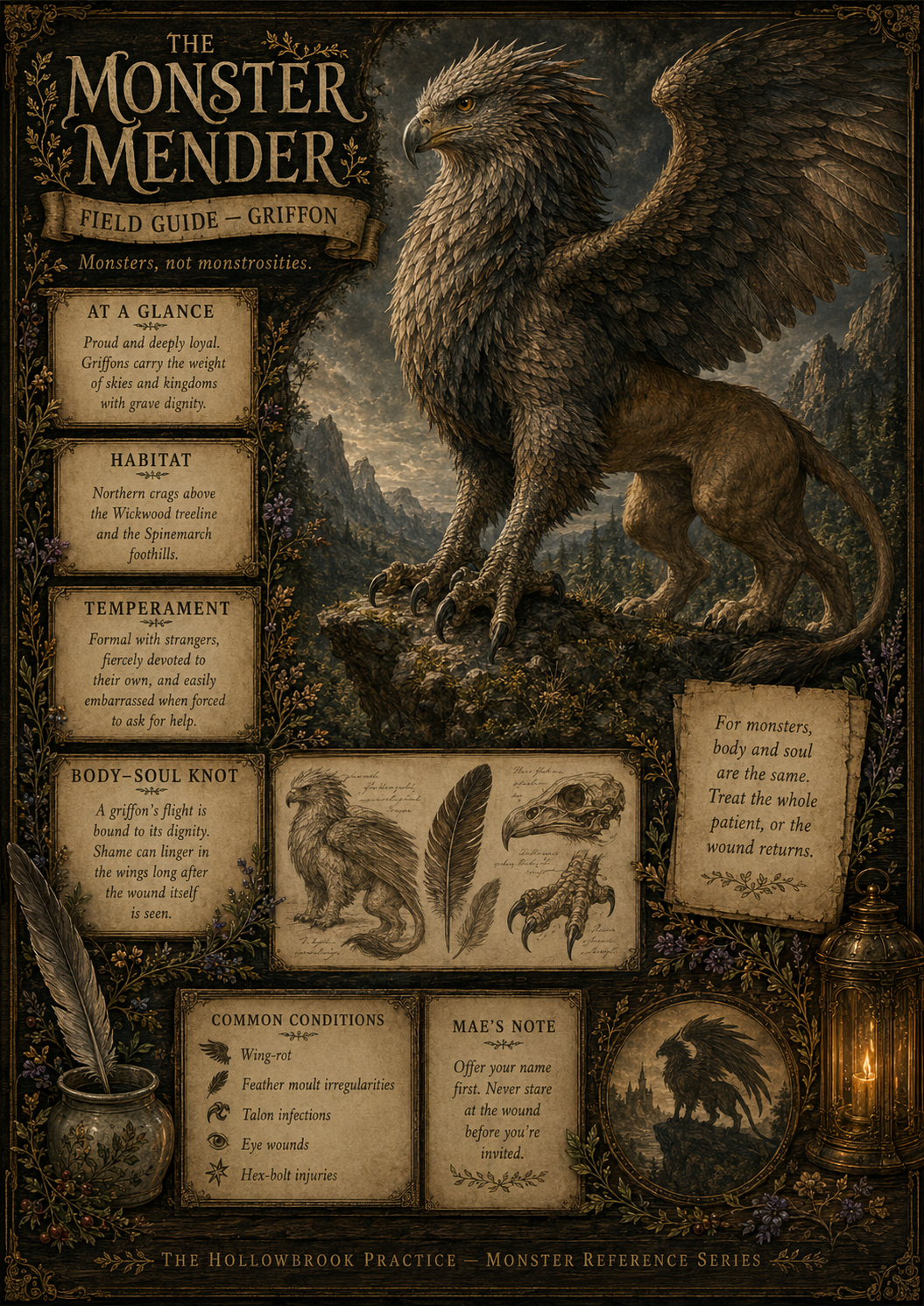
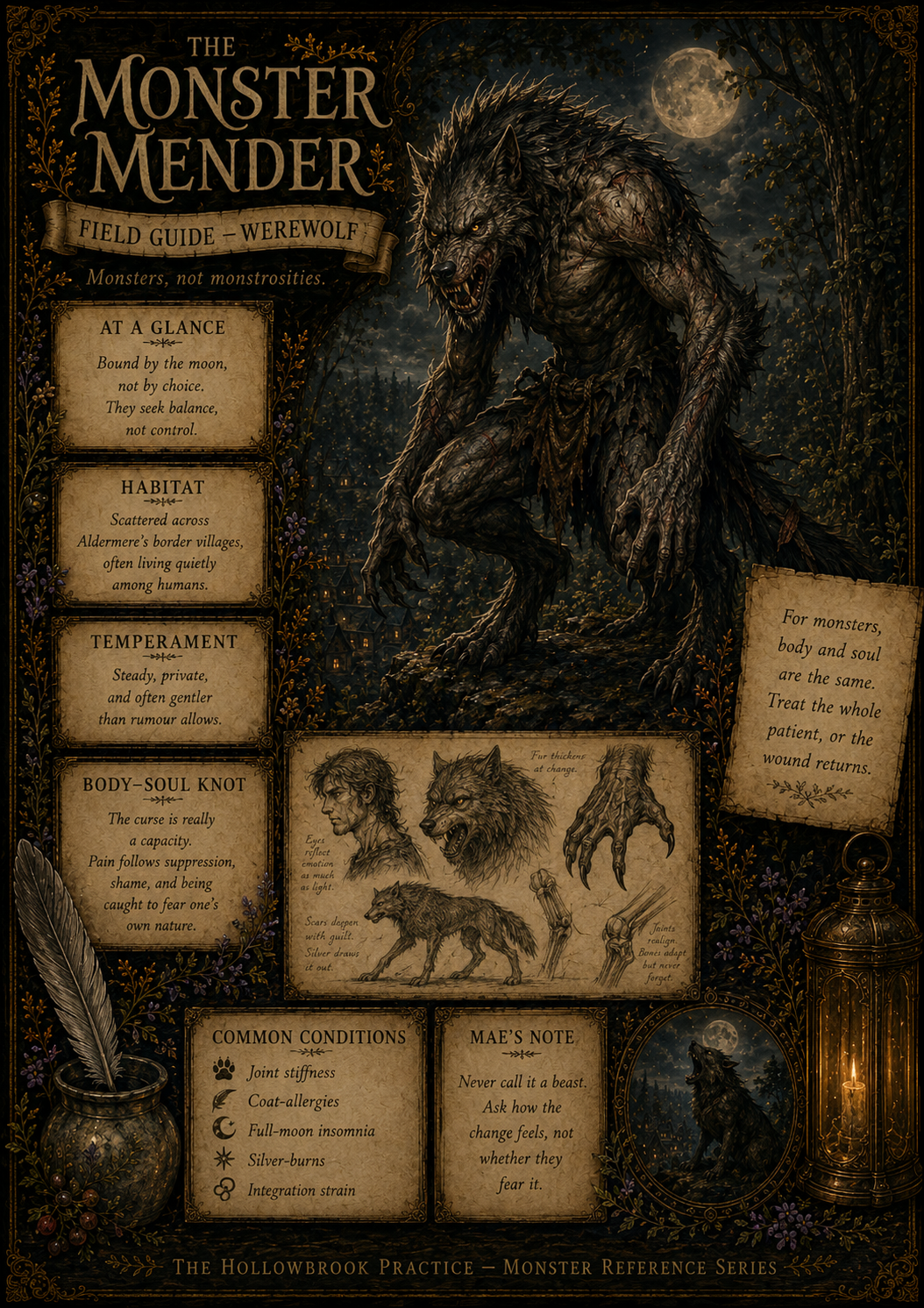
From the field guide: Mae keeps reference notes on the Griffon and the Werewolf.
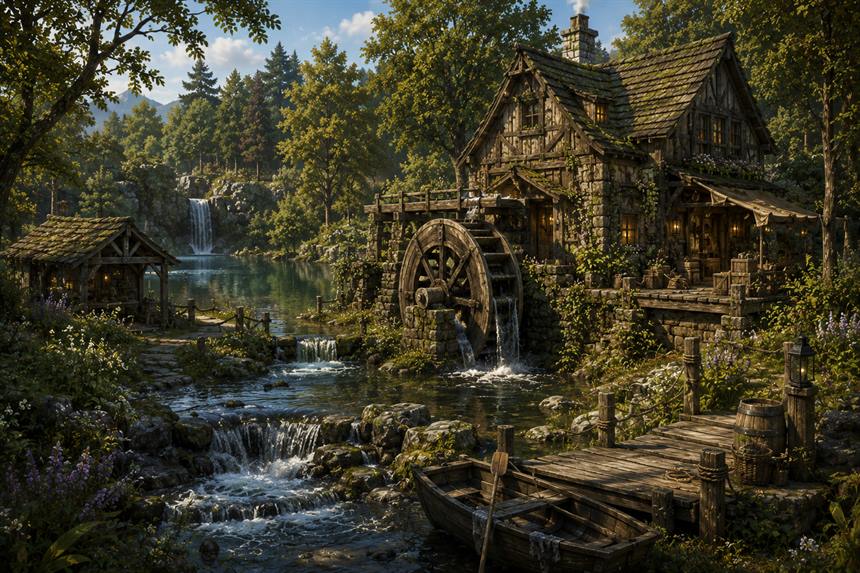
Slow in summer, fierce in spring, navigable by small boat for about a mile before the rapids start.
The river has its own resident spirit — Old Marrow — who is not the river itself, but lives in it. A distinction Mae understands, and the reader does not have to.
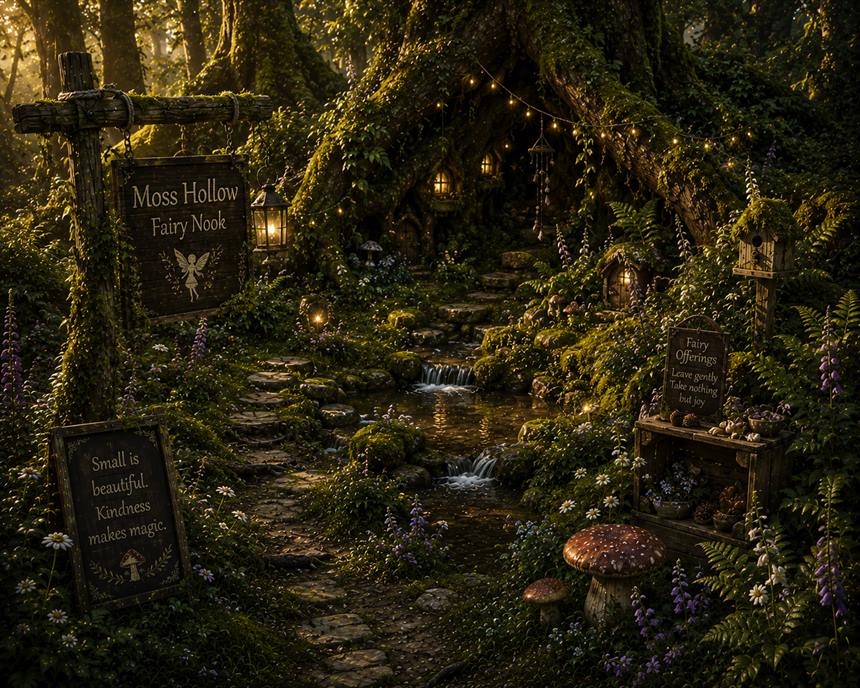
Fairy nooks at the wood’s edge — Moss Hollow beneath the trees, and Pixie Bank, which glimmers at dusk.
Home to the Wickwood’s two pixie courts, currently feuding. Mae treats both, and does not ask.